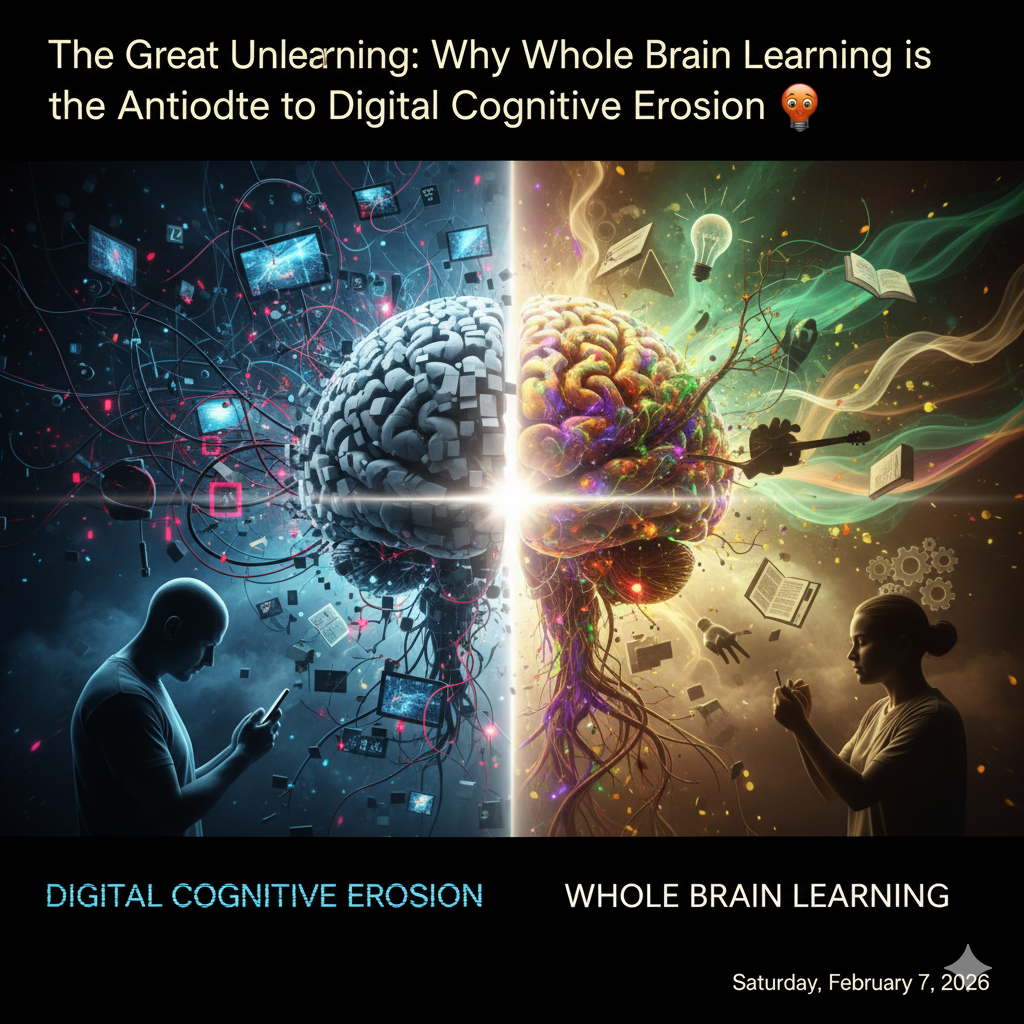
The Great Unlearning: Why Whole Brain Learning is the Antidote to Digital Cognitive Erosion
Whole Brain Learning & The End of the Flynn Effect?
Imagine a toddler sitting in a high chair. Before she can name the colors in a physical picture book, her thumb is already performing a flawless, rhythmic motion: the swipe. This child is part of a generation experiencing a digital universe before they can even tie their shoes. For decades, we believed early tech exposure was a shortcut to genius. We were wrong.
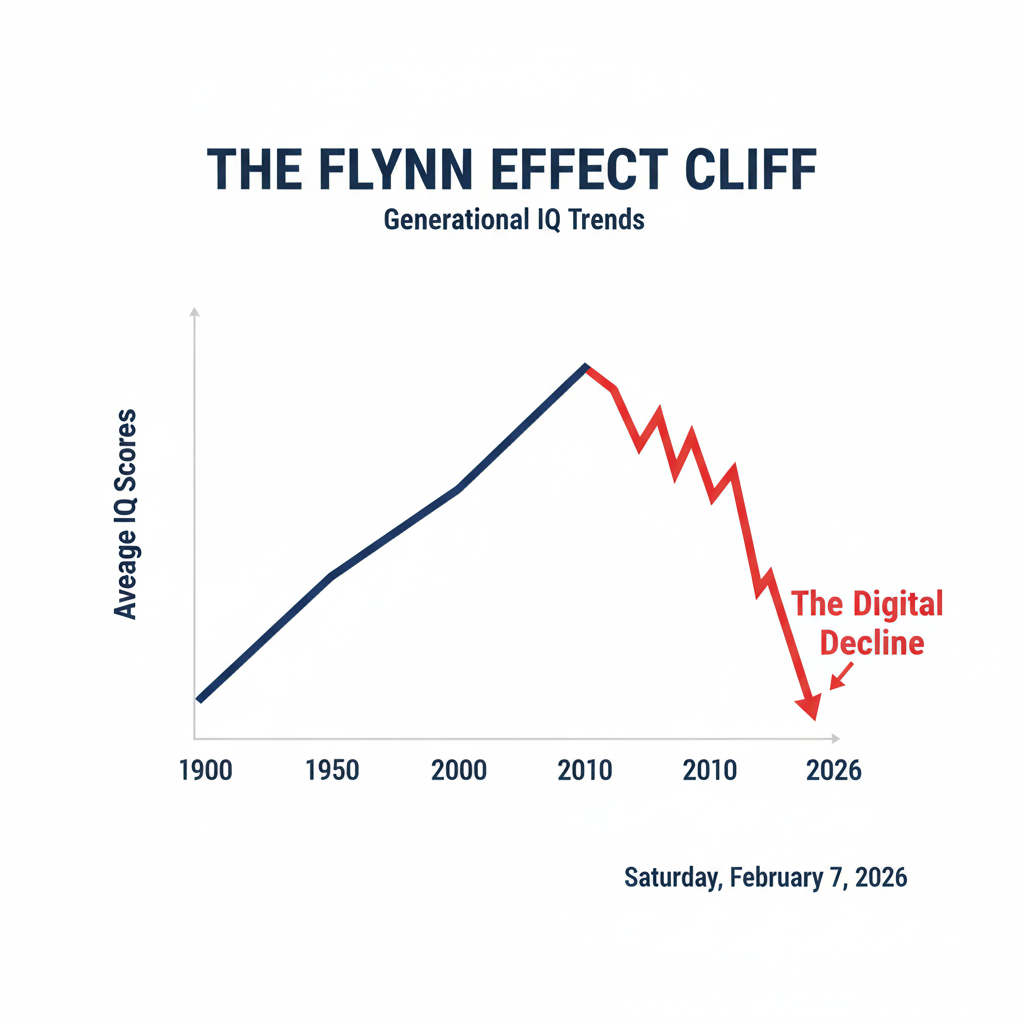
For over a hundred years, human intelligence followed the Flynn effect—the phenomenon where each new generation scored higher on IQ tests than the last. We were climbing a steady mountain of cognitive evolution. But recently, that climb hit a sudden drop. For the first time, children are scoring lower than their parents. This “smartest” generation is facing a cognitive erosion that demands a return to Whole Brain Learning.
The Algorithm that Stole Boredom
The source of this decline begins with a simple truth: boredom used to be the seed of curiosity. Today, that gap is instantly filled by an algorithm. With Gen Z averaging nine hours of daily screen time, the brain is under relentless stimulation.
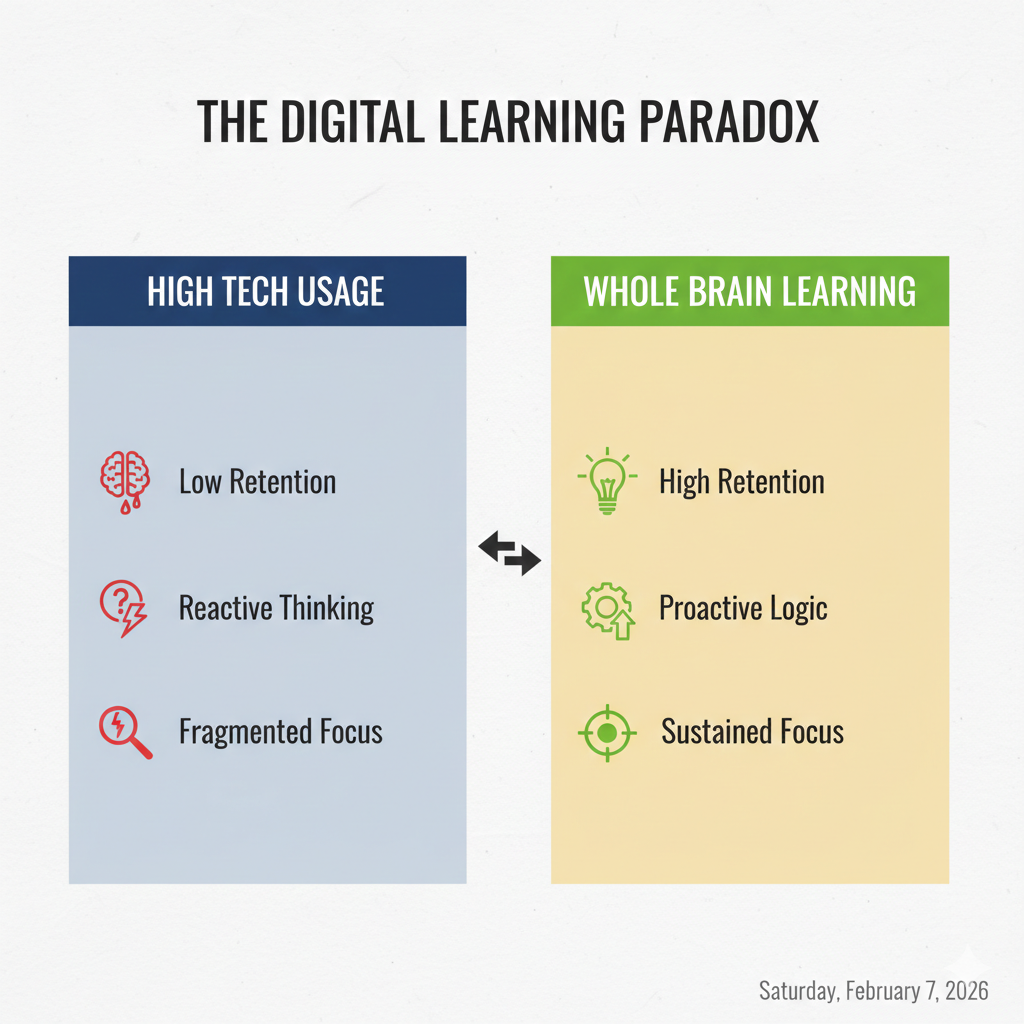
This isn’t just distraction; it’s a reshaping of the brain’s architecture. When information is a tap away, the brain stops storing it. Memory is becoming “external,” stored in the cloud rather than the cortex. Thinking, once deep and proactive, has become reactive. To combat this, Whole Brain Learning emphasizes internalizing knowledge rather than just “searching” for it.
The Classroom Paradox
We’ve flooded classrooms with tablets, assuming more tech equals more learning. However, data across 80 countries tells a different story. In a startling reversal, the more digital technology is adopted in schools, the more student performance drops.
Students using computers for five hours a day score significantly lower in reading comprehension and mental arithmetic. The tools meant to sharpen minds are dulling them. This is why a Whole Brain Learning framework is necessary—to balance digital access with traditional cognitive rigor.
The Biological Cost of Fragmented Processing
The erosion is also physiological. The “blue light” glow has led to a generation that sleeps significantly less. This loss sabotages the brain’s ability to regulate emotions. While critics argue youth excel at “rapid information scanning,” there is a vital difference between fast fragmented processing and the deep linear thinking required to solve complex problems.
The Case for Whole Brain Learning
This brings us to a critical crossroads. If our digital diet is starving the parts of the brain responsible for focus and logic, how do we fix it? Whole Brain Learning is the antidote.
It recognizes that for a mind to be resilient, it cannot rely solely on “reactive” digital functions. We must intentionally engage the entire cognitive spectrum:
- The Analytical Left: Reclaiming mental arithmetic and logical sequencing that screens have replaced.
- The Creative Right: Allowing for “unplugged” boredom that sparks original thought.
- The Deep Core: Strengthening long-term memory and sustained focus—the “muscles” currently atrophying.
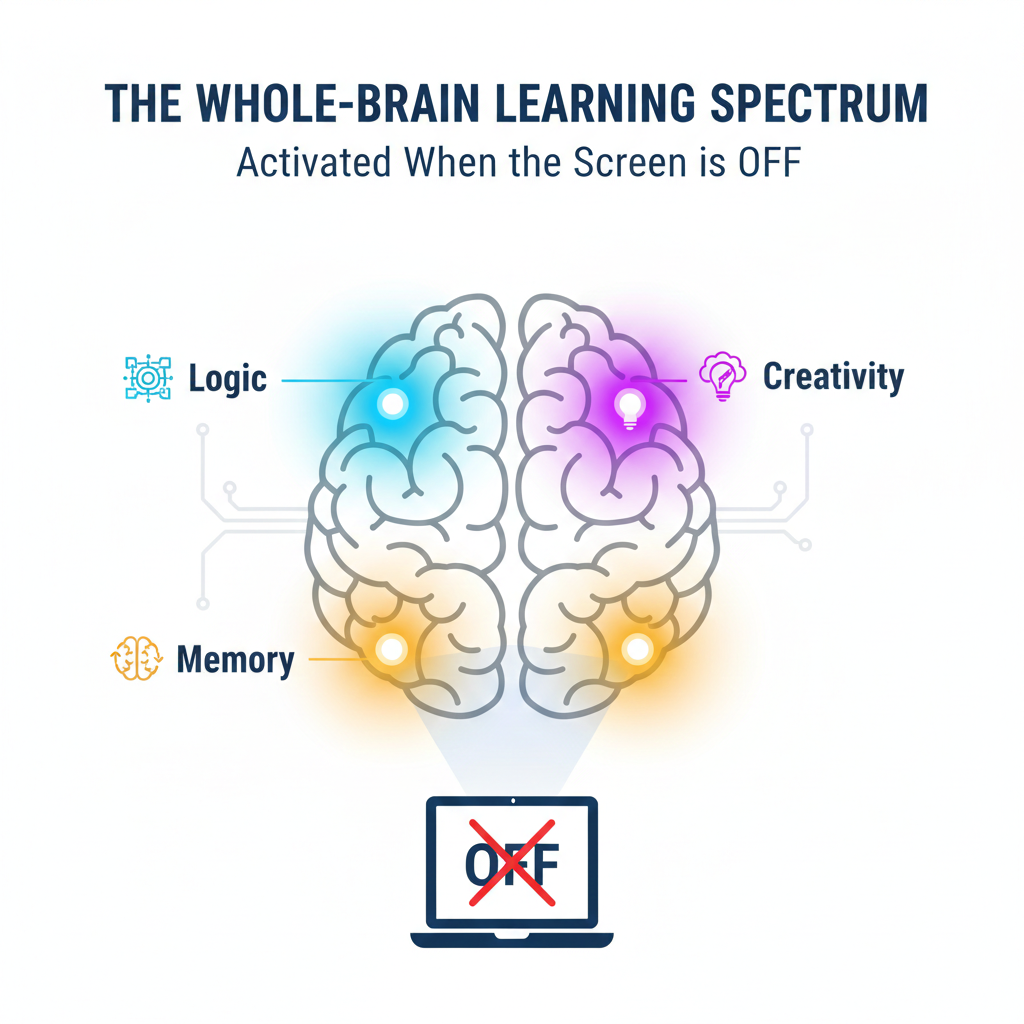
We are part of a massive, unplanned experiment on the human mind. To ensure the generational IQ story doesn’t end in decline, we must move beyond the screen. We must return to methods that demand effort and engage the whole brain. Only then can we turn this vertical drop back into a climb.
As we navigate this “second innings” of the digital age, we must remain vigilant. The future of learning is human because only the human can supply the wisdom to manage these powerful, yet ethically volatile, systems.
Strategic wisdom requires a resilient mind. Complement your learning journey at Minddune.com—the mindfulness and motivation vertical of Abhidnya Learning Spaces.